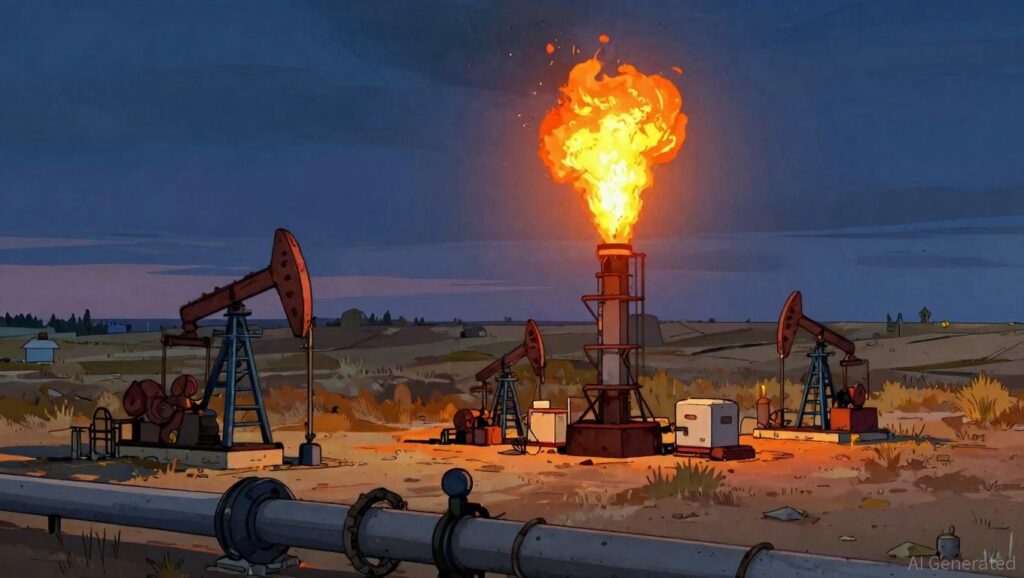
Alberta oil and gas producers flared 644 million cubic metres of natural gas in the first nine months of 2026, up 10% from a year earlier, according to Reuters calculations based on Alberta Energy Regulator data. Oil output rose 2% over the same period, meaning producers flared roughly 8% more gas per barrel of oil.
The nine-month total was already 96% of Alberta’s former annual flaring limit of 670 million cubic metres. The regulator removed that limit in June 2025 following directives from provincial officials, Reuters reported. Producers had exceeded it in 2024, flaring about 913 million cubic metres. Flaring then fell 15% in 2025 even as oil output grew. The regulator credited operational improvements, greater gas conservation and stronger economic incentives to cut emissions.
What the flared gas is worth
If the nine-month growth rate held for all of 2026, producers would flare about 853 million cubic metres, roughly 27% above the former limit. At the regulator’s forecast of C$2.73 per gigajoule for AECO-C, Alberta’s wholesale gas benchmark, that volume would have a gross sale value of about C$87 million. That is about 0.07% of the C$130 billion value the regulator placed on Alberta’s energy production in 2025.
Gross sale value is not the same as what producers could earn by capturing the gas. At remote oil sites, small volumes of gas produced alongside oil may not cover the cost of compression, gathering lines and processing. Local prices also matter: the regulator said the AECO-C discount to the U.S. Henry Hub benchmark widened in 2025 as Alberta supply grew and inventories remained high.
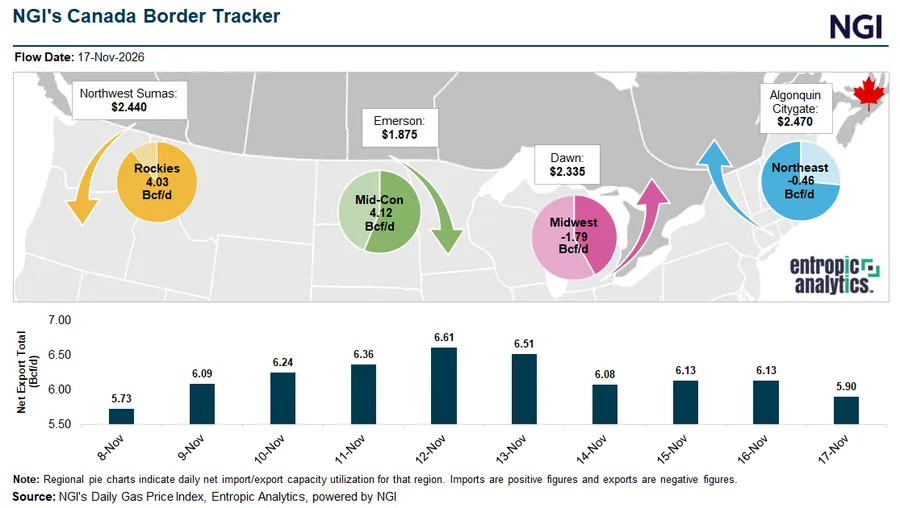
NGI’s Canada Border Tracker shows gas flows from Canada into the United States and prices at border crossings on November 17, 2026. Canadian net exports totaled 5.90 billion cubic feet per day.
Who would build new pipeline capacity?
On November 23, 2026, Alberta introduced legislation that would allow the province to create Crown entities to plan or build natural gas pipelines if private companies do not. Energy Minister Brian Jean described the proposed power as a “last resort.” He said TC Energy’s NGTL gathering network was fully subscribed until 2029 and that capacity additions beyond 2030 remained uncertain.
TC Energy has proposed its own expansion: the 370-kilometre Alberta Growth Connector would initially carry 1 billion cubic feet per day to serve the oil sands region. The plan assumes Alberta gas demand will rise roughly 25% over five years, The Globe and Mail reported. In a letter to Premier Danielle Smith, TC Energy chief executive François Poirier warned that the province’s approach could create “significant market instability,” according to The Canadian Press.
Federal flaring restrictions are due in 2028
Canada’s methane regulations are scheduled to take effect in 2028. They would permit flaring only for health and safety reasons or where an engineering study finds no alternative, Reuters reported. Alberta points to its existing industrial carbon price for large emitters and its requirement that operators document the alternatives they considered before flaring.
Ottawa and Alberta are negotiating an equivalency agreement that would allow producers to follow provincial rules if those rules deliver the same environmental outcomes. Until that question is settled, producers at remote sites face uncertainty over whether they will need to invest in gas capture or curtail output to meet the federal restrictions.