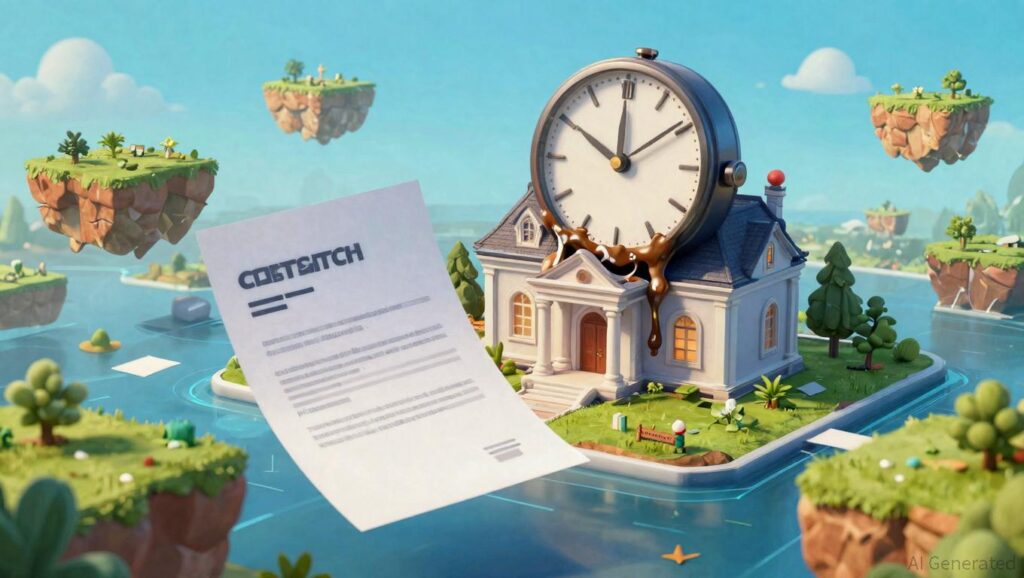
In December 2021, a collector known as P-Ape paid about 71,000 SAND for nine adjoining parcels next to Snoop Dogg’s virtual mansion in The Sandbox. Bitcoin.com put the price at roughly $450,000 at settlement. Winning the auction was not the last step: the sale instructions told the buyer to contact The Sandbox so its team could transfer the estate.
On November 26, 2026, the same 71,000 SAND was worth roughly $2,400. That is a valuation of the tokens used to pay for the estate, not an appraisal of the land. Even if another buyer had offered exactly 71,000 SAND for the nine parcels, the dollar price would have been about 99.5% lower. What made the parcels usable was a separate question, one that depended on the company as well as the blockchain.
The company controlled the map
The December 2, 2021, Snoopverse sale offered 122 plots, 67 of them bundled with three exclusive NFTs, plus three small estates auctioned on OpenSea. Buyers could bid against one another, but The Sandbox decided how many parcels to release, when to sell them and which ones would border the celebrity property.
Demand for parcels had emerged before players could try the world. On November 17, 2021, DappRadar reported that a single parcel cost at least 3,000 SAND, then more than $10,000, with individual plots generally priced at $10,000 to $15,000. The first alpha test did not begin until November 29. In the week Bitcoin.com covered, The Sandbox recorded 4,433 sales worth $70 million, the highest seven-day total among NFT collections.
What the blockchain records
A November 25, 2026, CoinPaprika audit examined the contracts for 22 collections of blockchain-game items, including virtual land. The distinction it drew is important: the blockchain records the owner and the pointer to the metadata. The name, image and traits retrieved through that pointer need not be stored on the blockchain.
CoinPaprika found that 17 of the 22 collections kept their metadata on company web servers. In 12 cases, the administrative key holder could redirect or upgrade the metadata. The Sandbox’s LAND contract used company-hosted metadata and an upgradeable proxy. Five contracts in the audit, including Mavia Land and Everdome Lands, pointed to hostnames that no longer resolved. Their tokens still existed, but their images could no longer be retrieved.
Service terms can impose a separate limit. Decentraland, a different virtual-world operator, updated its terms in August 2026 to say that its foundation and DAO could suspend or terminate services or access without prior notice or liability. Its terms also said that buying LAND conferred no rights or licenses in the platform’s artwork. Those are Decentraland’s terms, not The Sandbox’s, but they illustrate the difference between the right to transfer a token and the right to keep using a platform.
A payment token is not a stake in the business
SAND peaked at $8.40 in late 2021. Applying that price to the maximum supply of 3 billion tokens gives an implied fully diluted value of $25.2 billion, not a valuation of the operating company. On November 26, 2026, CoinGecko put SAND at $0.03397, down 99.6% from its peak, with a market capitalization of about $99.8 million and a fully diluted value of $101.9 million.
Land prices could also fall in the currency used to quote them. Citing CoinGecko, CoinPaprika put Decentraland’s LAND floor at 0.033 ETH on November 24, 2026, down 99.76% from the highest floor in CoinGecko’s records, 13.99 ETH. That comparison measures a decline in ether terms; it does not establish a resale price for P-Ape’s Sandbox estate.
Audience figures offered no simple way to value a plot either. An October 2022 count put the number of daily users interacting with The Sandbox’s blockchain at about 500. Animoca Brands founder Yat Siu disputed the count, citing about 200,000 monthly active users. The figures cover different activities and time periods and cannot be compared directly.
The Sandbox is scheduled to launch Sandbox Studio, an AI-assisted tool for creating multiplayer games, on December 1, 2026. Under the announced model, eligible creators would earn commissions in fiat currency. Players would use SAND to buy Silicon, then spend Silicon on items and avatar changes inside games. A creator could publish through the Studio marketplace without relying on a particular parcel.
Animoca Brands bought The Sandbox for $4.875 million in 2018, and The Sandbox raised $93 million in a SoftBank-led Series B in November 2021. SAND holders own no share of that private company and have no claim on its revenue or the Studio’s commissions. The distinction matters for the Snoopverse buyer: the company can build a business around spending in games without making the coordinates next to Snoop Dogg’s mansion any more valuable.