
An AInvest analysis published on November 24, 2026, reported that attackers took roughly $6.3 billion to $6.4 billion from Binance’s online wallets on October 29. According to the account, the attackers first compromised employees’ computers and then used an internal AI tool to reach the systems running the wallets. The reported entry point was employee access, not a flaw in a smart contract.
The analysis argues that AI can make parts of an attack—particularly deceptive identities and recruitment lures—cheaper to carry out, without necessarily giving new attackers the ability to pull off the largest thefts. Citing Chainalysis, it says reported crypto-hack losses totaled $22.34 billion from 2021 through October 29, 2026, of which $13.24 billion, or 59%, was attributed to suspected North Korea-linked operations. Those figures describe suspected attribution, not a confirmed identity for every attack.
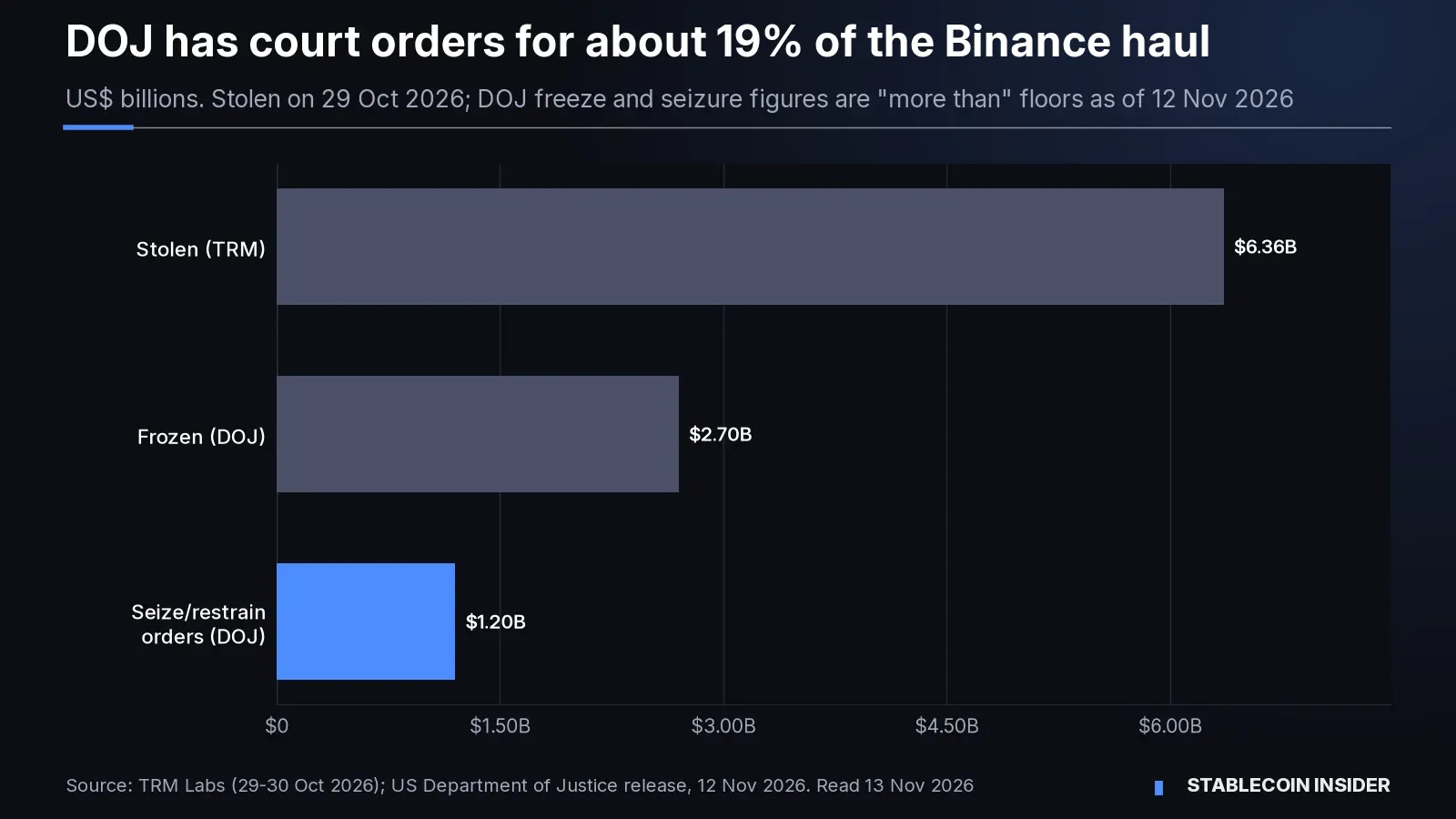
Recovery depended in part on the assets taken. Citing TRM Labs’ estimate of a $6.36 billion Binance loss, AInvest said more than $2.7 billion—about 42%—was frozen. Tether said it froze more than $1.5 billion, while Circle said it froze about $1.1 billion. The analysis contrasts that outcome with the 2025 Bybit theft, which involved ether that has no issuer able to freeze it. It also reports that Binance replaced more than $6.34 billion in customer assets with its own funds.

The business implications extend beyond exchange security. The analysis cites FBI figures showing $11.37 billion in reported U.S. virtual-currency crime losses in 2025, including $7.23 billion in crypto investment fraud. It also reports rising revenue at security vendors Palo Alto Networks and CrowdStrike. Those company results show demand for security products; they do not, on their own, establish that customers’ losses are falling.