Injective Labs asked the U.S. Securities and Exchange Commission on November 23, 2026, to let blockchain-based order books trade tokenized U.S. stocks under its five-year exemption. A venue that opened the same day illustrated a separate limit on the market: companies can object to trading in third-party tokens representing their shares, regardless of how buyers and sellers are matched.
OKXICE, a joint venture between OKX and New York Stock Exchange parent Intercontinental Exchange, launched with six individual stocks and 59 Direxion exchange-traded funds. Crypto Briefing reported that 56 of the 62 companies on the venue’s original roster had formally objected before launch. By November 5, the total number of objectors had reached 67, including Apple, Microsoft, Nvidia and JPMorgan Chase.
What the SEC allows, and what Injective wants changed
The SEC’s September 17 order grants conditional relief from exchange registration for qualifying venues and from dealer registration for firms supplying liquidity to their automated market-maker pools. Those pools use a formula to price trades. Injective instead uses an onchain order book: buyers and sellers post orders, which the system matches in frequent batches designed to reduce the advantage of trading on speed.
In its 22-page letter, Injective argued that limiting relief to pools conflicts with the SEC’s stated preference for technology-neutral rules. It proposed covering order books under the same conditions, with added safeguards including trading surveillance, self-trade prevention, minimum price increments, price limits tied to the underlying stock during market hours, and trading halts enforced by the protocol. The SEC has not said whether it will adopt the proposal.
The existing order covers tokens representing actual shares, with the same economic interest, dividends, voting rights and liquidation rights. A token that merely tracks a stock price does not qualify. Before listing a third party’s version of a stock, a venue must notify the issuer and give it 30 days to object. It may proceed if the issuer does not respond; affirmative consent is not required.
Trading is capped at 0.25% of the underlying stock’s average daily volume for the largest stocks and 2.5% for a second tier. Venues must halt trading when the underlying stock halts. They cannot lend or pledge customer assets, extend credit or conduct primary offerings. Because the venues are exempt from exchange registration, they sit outside Regulation NMS rules governing displayed quotes and order routing, though anti-fraud law still applies.
What traded at OKXICE
The six stocks available at launch were Coinbase, Robinhood, Strategy, Circle, BitGo and Securitize. A single sponsor, Direxion, accounted for all 59 ETFs. That distinction matters: a fund sponsor can consent to tokenization of fund shares without each company in the portfolio having to accept a tokenized listing of its own stock. OKXICE planned to introduce 113 assets in stages.
According to OKXICE statistics reported by ChainCatcher, the six stock pools recorded 2,234 trades worth about $2.15 million on the first day and held about $1.22 million in liquidity. One wallet accounted for 93% of volume. It was suspected to belong to a platform liquidity provider, but its ownership was not confirmed. That concentration limits what the first day’s turnover says about demand from other traders.
Why the distinction matters to Injective
A trading venue can earn fees that do not flow to the blockchain that settles its trades. ChainCatcher reported that OKXICE charges 0.30% per trade, split between liquidity providers at 0.20% and the platform at 0.10%. On a $1 million trade, that schedule implies $2,000 for liquidity providers and $1,000 for the venue. By comparison, Injective advertises a median transaction cost of $0.0001 on its own chain. These figures describe different services, not revenue that Injective earned from OKXICE’s launch.
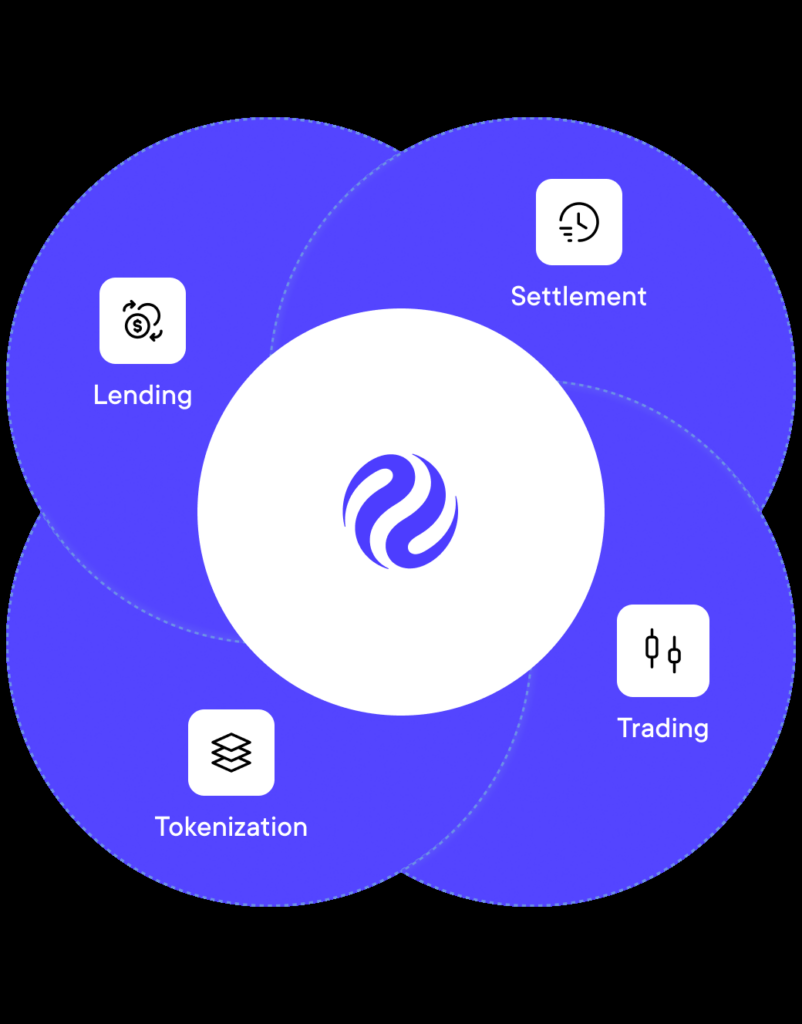
Injective already has a role on the ownership side of the market. Its affiliate, Injective Institutional Services, became an SEC-registered transfer agent in August, allowing it to maintain official securities ownership records. Its issuance platform, Injective Mint, lets issuers set restrictions on who may hold a token and in which jurisdictions. Neither capability makes its order book eligible under the existing exemption.
Injective’s reported trading figures also measure something different from demand for tokenized shares. The company reports more than $5.3 billion in cumulative trading volume for perpetual futures tied to real-world assets. Those contracts do not confer shareholder rights and fall outside the order.
The exemption expires five years after publication, and its continuation is contested. On November 24, Senators Elizabeth Warren, Chris Van Hollen, Tina Smith and Jack Reed urged the SEC to withdraw it, arguing that it could fragment liquidity and weaken investor protection. Even if the SEC instead grants Injective’s request, the change would expand how eligible shares can trade. It would not remove issuers’ right to object or raise the limits on trading volume.